
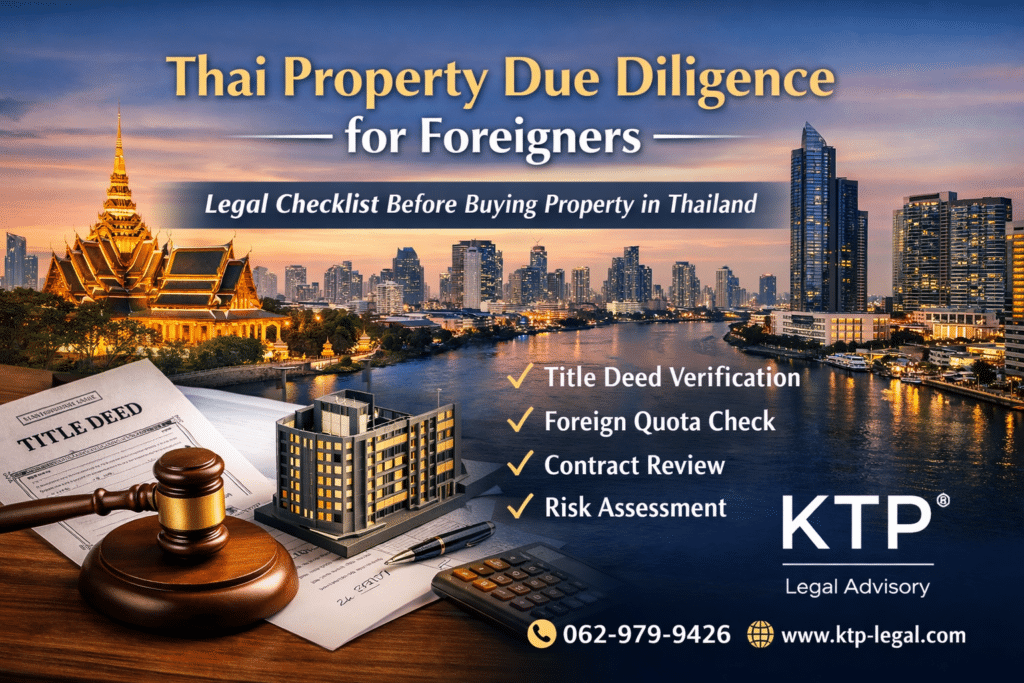
Thai Property Due Diligence for Foreigners: Complete Legal Guide Before Buying Property in Thailand (2026 Update)
Buying property in Thailand is an attractive investment opportunity for many foreigners. Whether purchasing a luxury condominium in Bangkok, a beachfront apartment in Phuket, or a residential unit in Chiangmai, Krabi, Southern Islands, Pattaya, Thailand offers strong lifestyle and rental potential.
However, Thai property law differs significantly from Western jurisdictions. Foreign buyers must understand that legal due diligence is not optional it is essential.
This guide explains what Thai property due diligence means, why it is necessary, and what legal checks every foreigner should complete before signing a sale and purchase agreement.
Can Foreigners Own Property in Thailand?
Under Thai law, foreigners cannot own land. However, foreigners may legally:
- Own a condominium unit (within foreign ownership quota limits)
- Register a long-term lease (maximum 30 years per term)
- Invest through certain structured arrangements (subject to strict legal restrictions)
Condominium ownership is governed by the Condominium Act B.E. 2522, which permits foreign freehold ownership up to 49% of the total saleable area of the building.
Because ownership rights are regulated by statute, verifying compliance before purchase is critical.
What Is Thai Property Due Diligence?
Property due diligence in Thailand is a structured legal investigation conducted before signing contracts or transferring ownership at the Land Office.
It ensures that:
- The seller has lawful ownership
- The property is free from encumbrances
- The foreign quota is available
- The contract terms are legally sound
- The buyer’s funds comply with Thai foreign exchange regulations
Without due diligence, foreign buyers expose themselves to avoidable legal and financial risks.
Step 1: Title Deed Verification and Legal Presumption of Ownership
The first and most important step in Thai property due diligence is verifying the land title deed (“Chanote”) at the Land Office.
Under Thai law, ownership and possession of immovable property are governed by the Thai Civil and Commercial Code.
According to Thai Civil and Commercial Code Section 1373:
If immovable property is registered in the Land Register, it is presumed that the person whose name appears in the register is the lawful possessor.
This legal presumption is extremely important for foreign buyers.
It means that when a property whether land, building, or condominium unit is registered at the Land Office, the person whose name appears on the title deed is legally presumed to be the person entitled to possess and transfer the property.
However, this presumption only protects you if you verify it.
Why Ownership Verification Is Essential
Because Thai property rights are registration-based, you must always confirm:
- The name of the registered owner
- The identification details of the seller
- Whether the seller matches the name on the title deed
- Whether any co-owners exist
- Whether spousal consent is required (in case of marital property)
If you fail to verify the registered owner’s name, you risk:
- Entering into a transaction with a person who has no legal authority to sell
- Becoming a victim of fraudulent impersonation
- Paying deposit to someone who is not the lawful owner
- Facing refusal of transfer registration at the Land Office
In practice, real estate fraud in Thailand often occurs when buyers rely on informal documents, copies of title deeds, or representations made by agents without conducting an official Land Office search.
Because Thai law creates a presumption based on the Land Register, the only safe approach is to conduct a formal title search directly with the Land Office.
Practical Legal Safeguard
Proper due diligence should include:
- Obtaining a certified copy of the title deed
- Conducting an official Land Office search
- Verifying the seller’s identification against the registered name
- Confirming no conflicting ownership claims exist
In short: If immovable property is registered, the Land Register controls. And if the Land Register controls, you must verify it before paying any money.
For foreigners investing significant capital in Thailand, confirming that you are purchasing from the true legal owner is not just procedural, it is fundamental.
Step 2: Foreign Quota Verification (For Condominium Buyers)
Under Thai law, foreign ownership in a condominium project must not exceed 49% of the total saleable area.
Due diligence includes:
- Confirming current foreign ownership percentage
- Obtaining confirmation letter from juristic person
- Ensuring quota remains available at transfer date
If foreign quota is full, transfer cannot be registered in the foreigner’s name.
This issue frequently causes last-minute transfer failures when buyers skip legal verification.
Step 3: Mortgage and Litigation Search
A Land Office search reveals whether the property is:
- Mortgaged to a bank
- Subject to court seizure
- Under litigation
- Encumbered by registered rights
If a mortgage exists, legal arrangements must ensure discharge simultaneously at transfer.
Foreign buyers should never assume a property is debt-free without official verification.
Step 4: Developer Due Diligence (For Off-Plan Projects)
When purchasing off-plan units, additional checks are required:
- Company registration status
- Authorized directors
- Building construction permit
- Environmental Impact Assessment (if applicable)
- Land ownership of project land
- Existing project mortgages
- Financial stability of developer
Many disputes in Thailand arise from insufficient developer verification.
Step 5: Review of Sale and Purchase Agreement
Thai property contracts often favor developers or sellers.
Legal review should assess:
- Deposit forfeiture clauses
- Construction delay penalties
- Force majeure provisions
- Transfer fee allocation
- Sinking fund obligations
- Common area fees
- Default penalties
- Termination rights
Foreign buyers should never sign Thai-language contracts without independent legal review.
Step 6: Foreign Exchange Compliance (FET Form Requirement)
Foreign buyers must comply with Thailand’s foreign currency remittance rules.
To register condominium ownership:
- Funds must be transferred from overseas
- Funds must be remitted in foreign currency
- The receiving Thai bank must issue a Foreign Exchange Transaction (FET) Form
Without proper remittance documentation, the Land Office will refuse transfer registration.
This is one of the most common compliance mistakes foreign buyers make.
Step 7: Common Legal Risks Foreigners Face
Foreign property buyers in Thailand often encounter issues such as:
- Paying deposit before checking foreign quota
- Failing to verify seller identity
- Ignoring registered mortgage
- Assuming verbal promises are enforceable
- Signing bilingual contracts with inconsistent wording
- Buying through illegal nominee structures
- Underestimating transfer tax allocation
Each of these risks can result in significant financial loss.
Why Thai Property Due Diligence Is Essential
Thailand’s property system is document-based and registration-driven. Ownership only becomes legally effective upon proper registration at the Land Office.
Due diligence ensures:
- Legal compliance
- Risk mitigation
- Negotiation leverage
- Proper structuring
- Protection of investment capital
In cross-border transactions, preventive legal review is significantly more cost-effective than post-dispute litigation.
Final Thoughts
Thailand remains one of Southeast Asia’s most attractive real estate markets for foreign investors. However, property transactions are governed by strict statutory rules and formal registration procedures.
Thai property due diligence for foreigners is not a formality it is a critical legal safeguard.
Before signing any reservation agreement or transferring funds, professional legal review should be conducted to ensure compliance with Thai law and protection of your investment.
Please feel free to reach out to us for any consultations and you can learn more by this below link.
👉 https://ktp-legal.com/property-due-diligence/
KTP Legal Advisory provides comprehensive legal support for foreign property buyers across Thailand, including:
- Title deed and Land Office searches
- Foreign quota verification
- Contract review and negotiation
- Developer due diligence
- Transfer coordination and registration assistance
If you are considering purchasing property in Thailand and require professional legal guidance, we are ready to assist.
