
Think You Own the Property? Why Registration Is the Only Proof Under Thai Law
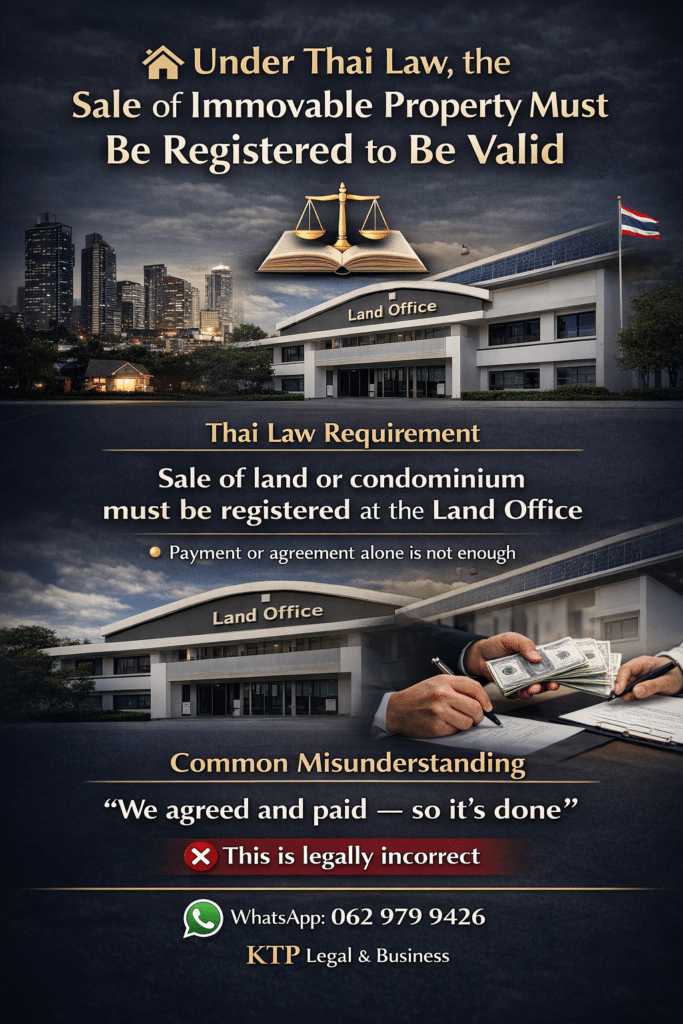
Under Thai Law, the Sale of Immovable Property Must Be Registered to Be Valid
Many buyers and sellers assume that once a purchase price has been agreed and a contract has been signed, a property transaction in Thailand is legally completed. This assumption is widespread, particularly among first-time buyers, foreign investors, and individuals who rely on informal negotiations or verbal assurances. In practice, parties often believe that payment, possession, and mutual intention are sufficient to establish ownership.
Under Thai law, however, this belief is incorrect.
In Thailand, the transfer of ownership of immovable property is governed by strict legal formalities. Without compliance with these statutory requirements, a sale of land or a condominium unit may be deemed legally void, regardless of whether payment has been made, possession has been delivered, or both parties genuinely intended to complete the transaction. Understanding this legal framework is essential for anyone buying, selling, or investing in real estate in Thailand.
Legal Framework Governing Property Sales in Thailand
Thai property law clearly distinguishes between a contractual agreement and the legal transfer of ownership. While parties are free to negotiate terms and enter into agreements, ownership of immovable property arises only when the law’s formal requirements are satisfied.
Section 456 of the Thai Civil and Commercial Code expressly provides that a sale of immovable property, including land, houses, and condominium units, is void unless it is made in writing and registered with a competent official. In practice, this means registration at the Land Office. Both elements are mandatory. A written contract alone is insufficient, and registration cannot be replaced by private agreement between the parties.
In simple terms, no registration means no legally valid sale. Even where the buyer has paid the full purchase price, the seller has handed over possession, or both parties believe that the transaction is complete, ownership does not legally transfer until registration at the Land Office is completed. Until that moment, the seller remains the lawful owner under Thai law.
Why Is Considered Immovable Property?
Immovable property under Thai law includes assets that are fixed to land or governed by specific property legislation. Common examples include land with a valid title deed, houses and buildings permanently attached to land, and condominium units registered under the Condominium Act. These assets are treated differently from movable property, such as vehicles or machinery, which may be transferred through delivery and agreement alone.
Because immovable property often involves significant value and long-term legal consequences, Thai law imposes formal registration requirements to ensure transparency, prevent fraud, and protect the rights of all parties involved. Registration serves as public evidence of ownership and provides legal certainty for future transactions.
Promises to Buy or Sell and Their Legal Effect
In many transactions, parties enter into agreements that fall short of a completed sale. These may include agreements to sell, agreements to buy, or promises relating to a future transfer of ownership. Such arrangements commonly arise in property reservations, pre-sale or off-plan developments, and informal negotiations between family members, business partners, or investors.
Thai law recognizes these agreements but imposes specific requirements for their enforceability. A promise to buy or sell immovable property is enforceable only if there is written evidence signed by the party to be bound, or if a deposit has been paid, or if partial payment of the purchase price has been made. If none of these conditions are satisfied, the agreement cannot be enforced in court.
As a result, verbal agreements alone provide little to no legal protection. Even where both parties clearly discussed and agreed on the transaction, the absence of proper documentation may prevent enforcement. This legal reality often surprises parties who rely on trust, personal relationships, or informal assurances.
Risks of Verbal Agreements and Informal Arrangements
In practice, many property disputes arise from so-called “gentlemen’s deals.” Buyers may claim that the seller verbally promised to transfer ownership at a later date, or that payment was made informally without proper documentation. Agents may assure parties that registration can be completed later, or that a reservation guarantees ownership.
While such situations may appear unfair from a practical or moral perspective, Thai courts decide cases based on legal evidence, not expectations or trust. Without written agreements and Land Office registration, courts will generally refuse to enforce the transaction, regardless of the parties’ sincerity or intentions.
Why Registration Matters in Real Transactions
The requirement for registration affects a wide range of real-world scenarios. Buyers may move into a property before transfer, investors may rely on side agreements, or parties may delay registration due to financing issues or administrative convenience. These situations can become legally problematic if circumstances change.
Disputes often arise when the seller changes their mind, the property is sold to another buyer, the purchase price increases, or one party passes away. In corporate transactions, issues may arise if a company is dissolved or becomes subject to legal claims. Without registration, the buyer may have no ownership rights and only limited remedies.
Registration Is the Legal Act That Creates Ownership
One of the most dangerous misconceptions in Thai property transactions is the belief that registration is a mere formality. In reality, registration is the legal act that creates ownership. Until registration occurs, the buyer does not legally own the property, and the seller remains the registered owner. During this period, the property may still be sold, mortgaged, or seized by creditors.
Legal formalities in Thai property law are not bureaucratic obstacles. They are the foundation of property rights and legal certainty. Proper registration protects both buyers and sellers and reduces the risk of future disputes.
Key Legal Takeaways
Under Thai law, ownership of immovable property arises only upon registration at the Land Office. A sale without registration is legally void. Promises to sell may be unenforceable without proper written evidence, and verbal agreements provide minimal legal protection. Proper documentation and registration are essential to protect the interests of all parties involved.
Final Thought
Thai property law prioritizes clarity, certainty, and public registration. These principles exist to prevent fraud, reduce disputes, and ensure transparency in property ownership. Anyone involved in a property transaction in Thailand should understand these requirements and seek professional legal advice before signing agreements or making payment. Legal protection begins with getting the fundamentals right.
Understanding the legal requirements is the first step to protecting your property rights in Thailand.
If you are planning to buy or sell property in Thailand, seeking legal advice early can make all the difference.
